

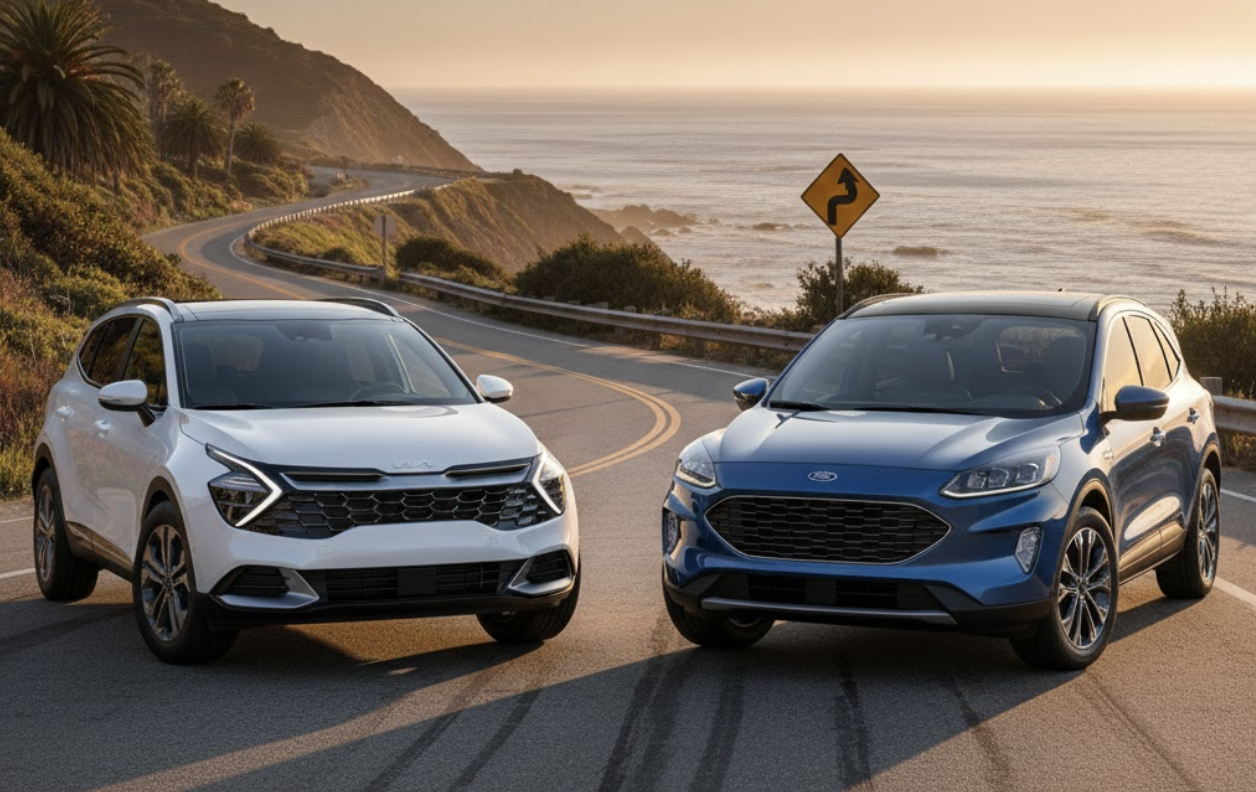
Compact hybrid SUVs have become genuinely practical for buyers balancing fuel efficiency with three-row seating and towing capability. The 2026 Kia Sportage Hybrid and 2026 Ford Escape Hybrid represent two different engineering approaches to this market segment. Both deliver impressive fuel economy. Both provide capable performance. But they solve different problems differently. Ken Ganley Kia Mentor works regularly with buyers comparing these vehicles, and honest evaluation requires understanding their actual differences rather than assuming one is universally superior based on brand reputation.
Fuel Economy: The Core Hybrid Advantage
The Kia Sportage Hybrid achieves approximately 32 mpg combined—genuinely impressive for a compact SUV providing three rows of seating and reasonable towing capacity. The Ford Escape Hybrid delivers approximately 43 mpg combined in optimal configurations—significantly better. That’s a meaningful gap. Over 100,000 miles, the Escape Hybrid’s superior efficiency translates into substantial fuel cost savings.
However, context matters. The Escape Hybrid achieves those numbers with front-wheel drive in optimal conditions. The Sportage Hybrid offers standard all-wheel drive across all trims. All-wheel drive reduces efficiency measurably. Comparing all-wheel drive Escape Hybrid configurations to Sportage Hybrid narrows the gap considerably. If all-wheel drive matters for your Ohio driving needs, the fuel economy advantage shifts.
All-Wheel Drive: Standard vs Optional
The Kia Sportage Hybrid includes standard all-wheel drive. That’s fundamental to how Kia engineered the vehicle. Power distribution adjusts automatically based on traction conditions. Winter driving, variable weather, and unpredictable road surfaces get consistent capability regardless of conditions.
The Ford Escape Hybrid offers all-wheel drive as an optional upgrade. That positioning reflects different engineering philosophy. Ford prioritizes fuel economy as the primary benefit, with all-wheel drive as additional capability for buyers wanting it. If weather and road conditions are stable in your area, that approach makes sense. If you’re navigating Ohio’s variable conditions regularly, the Sportage’s standard all-wheel drive provides peace of mind.
Interior Space and Seating Configurations
Both vehicles provide genuine three-row seating. The Sportage seats seven passengers. The Escape seats eight with optional third-row configuration. That modest difference is measurable but not dramatic. Third-row space in both vehicles is genuinely tight for adults—suitable for children or occasional adult occupancy rather than regular long-distance riding.
Cargo space differs more noticeably. With all seats in place, the Sportage provides 29.2 cubic feet. The Escape provides 37.5 cubic feet behind the third row. The Escape’s extra cargo space becomes genuinely useful for families managing weekly errands plus occasional long-distance gear. That difference compounds if you’re regularly carrying substantial cargo alongside passengers.
Engine Performance and Driving Dynamics
The Sportage Hybrid uses a 2.0L turbocharged four-cylinder combined with electric motor assistance. That delivers 227 horsepower with responsive acceleration. The Escape Hybrid uses a 2.5L naturally aspirated engine with electric assistance, producing 200 horsepower. That’s adequate but less dynamic.
In practice, the Sportage feels more energetic during acceleration. Highway merging and passing feel more confident. The Escape’s lower horsepower suffices for most driving but feels slightly less eager during demand situations. For highway-focused driving, the Sportage’s performance advantage matters.
Towing Capacity
The Sportage Hybrid tows 2,000 pounds maximum—adequate for small trailers but limited for boat trailers or substantial cargo. The Escape Hybrid tows 3,500 pounds—a meaningful advantage for families regularly towing. If towing is part of your lifestyle, the Escape Hybrid delivers genuine capability advantage.
Warranty and Long-Term Value
Kia’s warranty coverage is exceptionally strong. The Sportage Hybrid includes 10 years or 100,000 miles of powertrain warranty plus 5 years or 60,000 miles of basic coverage. That’s significantly better than Ford’s 5 years or 60,000 miles of powertrain warranty and 3 years or 36,000 miles of basic coverage.
Over multi-year ownership, Kia’s extended warranty provides peace of mind and reduces out-of-pocket repair costs if problems develop. That warranty advantage partially offsets the Escape’s fuel economy advantage.
Understanding Kia’s Broader Context
If you’re exploring Kia options, understanding Kia’s complete SUV lineup helps clarify where the Sportage Hybrid fits within the brand’s strategy. The Sportage serves compact SUV buyers. The Sorento serves mid-size buyers wanting more space. Understanding whether the Sorento offers three-row seating helps clarify whether you genuinely need that three-row capability or whether a simpler two-row vehicle better matches your actual needs.
Technology and Features
Both vehicles include modern infotainment systems, smartphone integration, and driver-assistance features. The Kia’s technology feels slightly more refined with better menu organization and more intuitive voice commands. The Ford’s systems work adequately but occasionally require multiple attempts for reliable voice recognition.
Neither vehicle includes cutting-edge luxury technology. Both prioritize practical features that genuinely enhance daily driving rather than impressive gadgets that complicate ownership.
Comparing Brands and Philosophies
Understanding how Kia compares to Hyundai reveals that sister companies often emphasize different brand positioning. Kia emphasizes distinctive styling and strong warranty backing. Hyundai emphasizes refinement and traditional luxury character. That same principle applies when comparing Kia to Ford—different manufacturers have different priorities reflected in vehicle engineering.
Real-World Ownership Experience
The Sportage Hybrid owner appreciates standard all-wheel drive, responsive performance, and exceptional warranty coverage. They accept slightly lower fuel economy as worthwhile trade-off for superior winter capability and peace of mind.
The Escape Hybrid owner prioritizes fuel economy and lower initial pricing. They’re comfortable with front-wheel drive as standard and appreciate the extra cargo space and towing capacity. Extended warranty coverage isn’t provided, so long-term repair costs become personal responsibility.
The Honest Decision
The Escape Hybrid wins on fuel economy and cargo space. The Sportage Hybrid wins on all-wheel drive capability, performance, and warranty coverage. Neither is objectively “better”—they’re different vehicles optimizing different priorities.
Choose the Escape Hybrid if fuel economy and cargo capacity are your primary concerns, you don’t need all-wheel drive regularly, and you’re comfortable managing potential repair costs after warranty expiration. Choose the Sportage Hybrid if all-weather capability, responsive performance, and comprehensive warranty protection matter more than peak fuel economy.
Connect with us


- June 2026
- May 2026
- April 2026
- December 2025
- November 2025
- October 2025
- September 2025
- August 2025
- July 2025
- June 2025
- May 2025
- April 2025
- March 2025
- February 2025
- January 2025
- December 2024
- November 2024
- October 2024
- September 2024
- August 2024
- July 2024
- June 2024
- May 2024
- December 2023
- November 2023
- October 2023
- September 2023
- August 2023
- July 2023
- June 2023
- May 2023
- April 2023
- March 2023
- February 2023
- January 2023
- December 2022
- November 2022
- October 2022
- September 2022
- August 2022
- July 2022
- June 2022
- May 2022
- April 2022
- March 2022
Archives
- 2024 Kia EV6
- 3-Row Seating
- Auto Financing
- Car Financing
- Car Leasing in Mentor
- Day Trips
- Electric Vehicles
- EV Market
- Family Friendly Vehicles
- Family Fun in Mentor
- Holidays In Mentor
- Ken Ganley Kia Mentor
- Ken Ganley Kia Mentor Service
- Kia Brake Repair
- Kia Carnival
- Kia EV6
- Kia K5
- Kia Niro
- Kia Seltos
- Kia Sorento
- Kia Soul
- Kia Sportage
- Kia Telluride
- Kirtland Hills Kia Dealer
- Kirtland Hills Kia Service
- Kirtland Hills Used Cars
- Mentor Amenities
- Mentor Foodies
- Mentor Kia Dealer
- Mentor Living
- Mentor Restaurants
- Mentor Used Cars
- Midsize Sedan
- Ohio Traveling
- Spacious Vehicles
- Things to Do in Mentor
- Tires in Mentor OH
- Uncategorized
- Versatile Vehicles
Categories
 Warranties include 10-year/100,000-mile powertrain and 5-year/60,000-mile basic. All warranties and roadside assistance are limited. See retailer for warranty details.