
Today: 9:00AM - 8:00PM
Blog

Electric Versatility: How the Kia EV9 Fits Your Lifestyle

The 2024 Kia EV9 emerges as a beacon of innovation in the electric vehicle market, setting new standards for what an electric SUV can offer. This vehicle is not just a step but a leap forward in automotive design, blending the environmental consciousness of electric power with the versatility and luxury of a modern SUV.

Design and Style: A Modern Aesthetic for the Electric Era

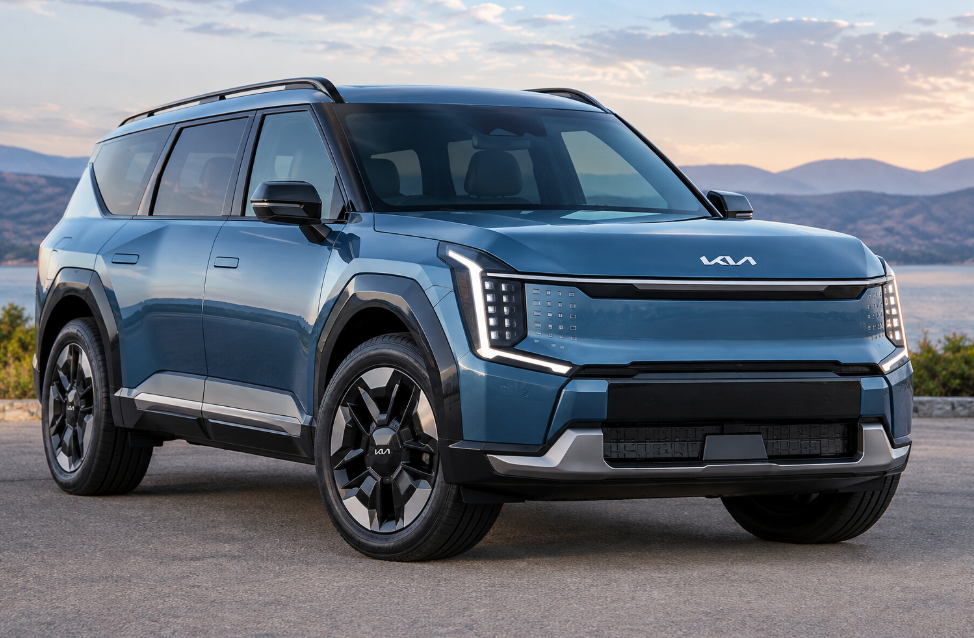
The Kia EV9's design sets it apart in the electric vehicle market. It sports a rugged yet sophisticated look, featuring a boxy, triangular design that emphasizes its sturdy build. The EV9's aesthetic appeal is further amplified by its sleek silhouette and aerodynamic design, which not only enhances its visual appeal but also contributes to its efficiency and performance on the road.

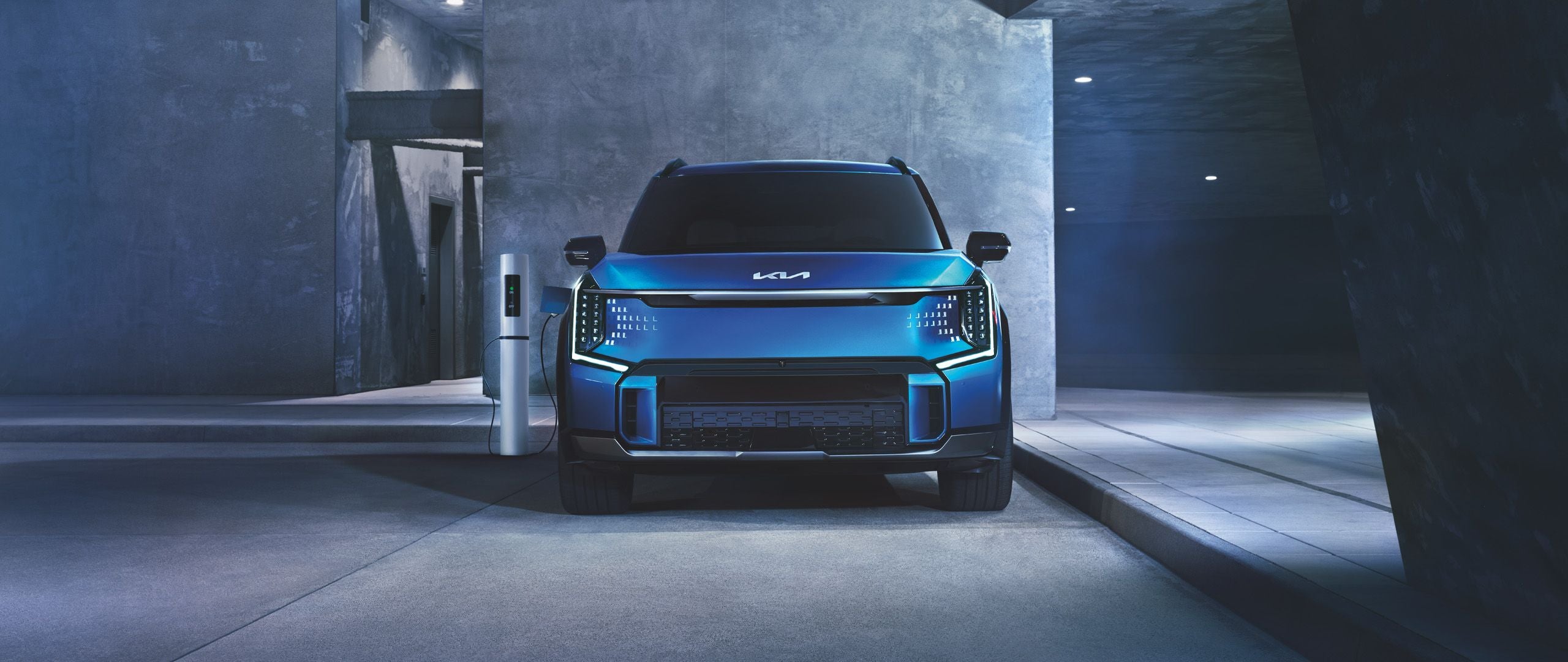
The EV9's length is slightly longer than the Telluride SUV, and it has a comparable height and width, making it a substantial presence on the road. Its 122.0-inch wheelbase and modular E-GMP electric underpinnings contribute to a balanced and robust structure. Unique elements like the Digital Tiger Face, a reinterpretation of Kia’s signature “Tiger Nose” grille, and the Star Map daytime running lights enhance its modern aesthetic.

Interior Comfort and Versatility: Tailored for Every Journey

Designed with the user in mind, it offers ample space and comfort for up to seven passengers. The seating arrangement is versatile, with options for a three-across bench seat or captain's chairs that swivel 180 degrees, catering to different family and travel needs.

Furthermore, the cabin's intuitive layout, with its user-friendly interfaces and ergonomic design, ensures that every control is within easy reach, enhancing the driving experience and making every journey a pleasure. The cabin is adorned with high-quality materials and innovative design touches, such as mesh headrests and illuminated touch-sensitive buttons, creating an environment that is both aesthetically pleasing and functionally advanced.

Click here to discover more about the Kia EV9

Performance: Power and Efficiency Combined

Built on a purpose-built EV platform using ultra-high-strength steel, it ensures a robust yet lightweight structure. With up to 379 hp and 516 lb.-ft. of torque, the EV9 provides exhilarating performance uncommon in three-row SUVs. Rapid acceleration is ideal for highway driving, and the towing capacity of up to 5,000 lbs. makes it suitable for various outdoor adventures. Moreover, the EV9’s regenerative braking system adds to its efficiency, capturing energy during braking and converting it into electric power, thus enhancing its range and overall energy utilization.

Technology and Connectivity: At the Forefront of Innovation

Kia EV9 is a technological marvel, featuring dual 12.3-inch screens, Apple CarPlay, Android Auto, and smart navigation. Over-the-air update capabilities allow for downloading new features, keeping the technology up to date. Additionally, the EV9’s connectivity extends to its integration with smart home devices and mobile apps, offering drivers unprecedented control and synchronization with their digital lifestyle, both inside and outside the vehicle. This includes the ability to enhance the vehicle's performance and customize LED lighting patterns through the Kia Connect Store.

Click here to find the latest accessories for your Kia EV9

Sustainability and Efficiency: Embracing a Greener Future

The EV9 represents Kia's commitment to sustainability with an EPA-estimated range of up to 304 miles and fast charging capabilities. It sets a new standard in electric vehicle efficiency, ideal for both daily commutes and longer journeys. Kia's dedication to sustainability in the EV9 also extends to the use of eco-friendly materials within the vehicle, further reducing its environmental footprint and aligning with the values of conscious consumers.

Safety Features: Prioritizing Passenger Protection

It has an array of Advanced Driver Assistance Systems (ADAS) that offer active and passive safety features. These include lane-keeping assist, adaptive cruise control, and blind-spot detection, providing drivers with an extra layer of protection and peace of mind. The EV9's safety is also enhanced by its sturdy construction and the use of high-strength materials, which provide additional protection in the event of a collision, further reinforcing its safety credentials.

Environmental Impact: Leading the Charge in Eco-Friendly Driving

The Kia EV9 not only reduces emissions through its electric powertrain but also emphasizes eco-friendly manufacturing processes. Kia’s commitment to sustainability extends beyond the vehicle, focusing on reducing environmental impact throughout the production cycle. This approach aligns with the growing consumer demand for environmentally responsible products and practices. The EV9's positive environmental impact is also evident in its contribution to reducing urban noise pollution, thanks to its silent electric motor, making city driving more pleasant and less disruptive.
Comparing the EV9: Standing Out in the Electric SUV Market

When compared to other electric SUVs on the market, the Kia EV9 stands out for its unique combination of style, performance, and affordability. Its starting price positions it as a competitive option for consumers looking for an electric vehicle that doesn't compromise on quality or features.

Click here to contact us about the new Kia EV9

Additionally, the EV9's range, charging speed, and interior space are on par with or surpass its competitors, making it a compelling choice for a wide range of consumers. In addition to its standout features, the EV9's commitment to user-friendly technology and sustainable practices places it at the forefront of the electric SUV market, appealing to a broad consumer base.

Lifestyle Integration: A Vehicle for Every Occasion

The Kia EV9 is designed to fit seamlessly into various lifestyles, offering a flexible and adaptable driving experience. Whether for urban commuting, family road trips, or adventurous excursions, the EV9 caters to a diverse range of needs and preferences. Its spacious interior, advanced technology, and versatile performance make it an ideal vehicle for individuals and families alike. The EV9's adaptability extends to various climates and terrains, thanks to its sophisticated climate control systems and all-terrain capabilities, making it a reliable companion for all kinds of adventures.

In Conclusion: The Future of Electric SUVs

The 2024 Kia EV9 is not just a vehicle; it represents a significant leap forward in the evolution of electric SUVs. It embodies a vision of the future where sustainability, performance, and luxury coexist in harmony. The EV9’s versatile nature makes it more than just a mode of transportation; it's a statement about the driver’s commitment to innovation, environmental responsibility, and cutting-edge technology.

As the world shifts towards more sustainable lifestyles, the EV9 stands as a beacon of what is possible in electric vehicle design and functionality. Its introduction marks a pivotal moment in the automotive industry, showcasing that electric SUVs can provide the practicality, comfort, and performance that modern consumers demand. The EV9 is a testament to Kia's foresight and dedication to shaping the future of mobility, offering a vehicle that not only meets the current needs of drivers but also anticipates the trends of tomorrow. With the EV9, Kia sets a new benchmark in the electric SUV category, promising an exciting and dynamic future for electric vehicles.
Recommended Posts

Kia Seltos vs Hyundai Tucson: The Better Compact SUV for Mentor Ohio Buyers

Here's something most comparison articles won't tell you upfront: the Kia Seltos and Hyundai Tucson aren't actually the same size. Shoppers cross-shop them all the time because the prices overlap, but the Tucson is a full compact SUV while the Seltos is a smaller, subcompact one, nearly a foot shorter end to end. That size gap is the whole story here. The Kia Seltos is the nimble, efficient, budget-friendly pick, while the Tucson is bigger, more powerful, and pricier. So the real question for Mentor buyers isn't which is "better," it's which size and price fit your life. Quick Answer: Choose the Kia Seltos if you want a lower price (mid-$20,000s), better fuel economy, easier parking, and available all-wheel drive for less money. Choose the Hyundai Tucson if you want more cargo space, more passenger room, and stronger power, and don't mind paying several thousand more to get it. For value-focused Mentor buyers, the Seltos usually wins; for families needing max space, the Tucson makes the case. They're Not Actually the Same Size This is the difference that drives everything else. The Tucson measures about 182.7 inches long, while the Seltos comes in around 172.6, roughly ten inches shorter. That's not a rounding error, it's a genuine class gap. Those ten inches show up everywhere. The Tucson offers noticeably more rear legroom and a much bigger cargo hold, about 38.7 cubic feet behind the back seats versus the Seltos's 26.6. For a growing Mentor family loading strollers, hockey bags, and a Costco run all at once, the Tucson simply holds more. The flip side is that the Seltos is easier to live with in tight spots. Squeezing into a snug spot in downtown Willoughby or a packed lot at Great Lakes Mall is simpler in the smaller Kia, and its shorter body makes it feel more nimble around town. If you rarely fill a cargo area to the roof, the Seltos's size is a feature, not a compromise. Which One Costs Less to Buy and Own The Seltos wins this round clearly, and it's not close. It starts in the mid-$20,000s, while the 2026 Tucson starts around $32,550, a gap of roughly $5,000 to $8,000 depending on trim. That price difference is the Seltos's strongest argument. For many Mentor buyers, five to eight thousand dollars is the deciding factor, full stop. It buys a lot of gas, winter tires, or simply a lower monthly payment. The Seltos also sips a bit less fuel, landing around 31 mpg combined against the Tucson's 26, thanks to its lighter body and smaller footprint. Over a year of commuting from Mentor to Cleveland, that efficiency edge quietly adds up. Both come backed by strong warranties, but Kia's 10-year/100,000-mile powertrain coverage is a genuine peace-of-mind bonus that's worth factoring in. If you want to dig deeper into how the two brands stack up, our Kia vs Hyundai breakdown covers it in more detail. Where the Tucson Earns Its Higher Price The Tucson isn't just bigger, it's genuinely more capable, and honesty demands giving it real credit. Its base engine makes 187 horsepower against the Seltos's 147, so it feels stronger merging onto I-90 or passing on a two-lane road. It also brings more standard tech and a more upscale cabin feel at the higher trims, along with that considerable space advantage. And importantly for Ohio, the Tucson offers a hybrid and even a plug-in hybrid version, something the Seltos doesn't offer at all. For a high-mileage Mentor commuter chasing maximum efficiency, the Tucson Hybrid is worth a serious look that the gas-only Seltos can't answer. So the Tucson's higher price isn't just for a badge. You're paying for more space, more power, and more powertrain options. Whether that's worth several thousand dollars comes down to how much you actually need those things. What About Ohio Winters Both handle snow well with all-wheel drive, but there's a cost angle worth knowing. Mentor sits in the Lake Erie snowbelt, and up toward Chardon the area regularly sees over 100 inches of snow a year, so AWD is a smart call here. The good news for value shoppers: the Seltos offers available all-wheel drive at a much lower entry price than the Tucson. You can get genuine snowbelt traction without stretching to the Tucson's sticker. Either way, pair your choice with a set of dedicated winter tires, because in a serious lake-effect squall on Route 2, good rubber matters even more than which SUV you picked. If you find the Seltos a touch small but love the value, it's also worth looking at the Kia Sportage, which sits right between the Seltos and Tucson in size and goes head-to-head with the Hyundai directly. Frequently Asked Questions Is the Kia Seltos smaller than the Hyundai Tucson? Yes, noticeably. The Seltos is about 10 inches shorter overall, making it a subcompact SUV versus the Tucson's compact class. The Tucson has more cargo room and rear legroom as a result. Which is cheaper, the Seltos or the Tucson? The Seltos, by a wide margin. It starts in the mid-$20,000s, while the 2026 Tucson starts around $32,550, a difference of roughly $5,000 to $8,000 depending on trim. Which gets better gas mileage? The Seltos, slightly, at around 31 mpg combined versus the Tucson's 26. Note the Tucson also offers hybrid and plug-in hybrid versions for buyers who want maximum efficiency. Does the Kia Seltos come with all-wheel drive? Yes. AWD is available across most Seltos trims and standard on the SX, giving Mentor drivers snowbelt traction at a lower price than the Tucson. Which should I buy for a Mentor family? If you need maximum space and power, the Tucson. If you want value, efficiency, and easier parking and don't regularly max out cargo, the Seltos is the smarter buy for most Mentor drivers. Compare Both at Ken Ganley Kia Mentor The best way to feel that size-and-value difference is to sit in the Seltos yourself and decide whether you need the Tucson's extra room, or whether the smaller Kia's lower price and easy footprint fit your life better. Visit Ken Ganley Kia Mentor at 9090 Mentor Ave. to explore the Seltos lineup and check current new vehicle specials.

Kia Telluride vs Toyota Highlander: Which 3-Row SUV Is Better for Mentor Ohio Families

If you're a Mentor family shopping three-row SUVs, the Kia Telluride and Toyota Highlander are almost certainly on your list. Both are top-rated, family-friendly, and built to haul kids, gear, and everything in between. But they're not equals. One offers more space, more power, and more standard features for less money. The other counters with better fuel economy and Toyota's long reliability reputation. Here's the honest, no-fluff breakdown for Mentor families, including the one factor that matters more here than almost anywhere else in the country: snow. Quick Answer For most Mentor families, the Kia Telluride wins. It starts thousands cheaper (~$40,735 vs ~$47,465), offers more cargo room, packs a stronger V6, includes more standard tech, and backs it with a 10-year/100,000-mile warranty. The Toyota Highlander counters with better fuel economy and a hybrid option. For our snowbelt winters, both need AWD, and that's a conversation worth having in person. Which One Costs Less, and What Do You Get The Telluride is the clear value winner. It starts around $40,735 versus roughly $47,465 for a comparably equipped Highlander, and it includes features Toyota charges extra for. At similar trim levels, the Telluride gives you more for less: Standard 12.3-inch touchscreen Available ventilated front seats from mid-trim Surround-view camera Upscale materials that feel a class above the price To match a Telluride's equipment, Highlander buyers often spend $3,000 to $5,000 more. The real kicker is the warranty. Kia's 10-year/100,000-mile powertrain warranty dwarfs Toyota's 5-year/60,000-mile coverage. When you're keeping a family SUV through a decade of Mentor winters, road salt, and 100,000-plus miles, that longer coverage is genuine peace of mind, and it's the single question our team hears most from families comparing these two. Which SUV Has More Room for Kids and Cargo The Telluride. It's bigger in nearly every dimension and swallows noticeably more cargo, which matters when you're hauling a full family plus their stuff. Here's how the two stack up: Spec Kia Telluride Toyota Highlander Length 199.2 in 194.9 in Width 78.3 in 76.0 in Cargo behind 3rd row 22.3 cu ft 16.0 cu ft Max cargo 89.3 cu ft 84.3 cu ft Seating Up to 8 Up to 8 Second-row legroom More generous Slightly less That 22.3 cubic feet behind the third row is a big deal. The Highlander's 16 fills up fast once you've packed a stroller, groceries, and hockey bags for a Saturday tournament at Mentor Ice Arena. The Telluride also comes standard with a dual-level cargo floor, which the Highlander doesn't offer at all. For a growing Mentor family that regularly uses all three rows, the Telluride simply lives larger. Which Handles Mentor Winters Better Both need all-wheel drive here, no exceptions. And this is where Mentor buyers should pay closer attention than shoppers almost anywhere else. Here's the local reality: Mentor sits squarely in Northeast Ohio's primary snowbelt. Just up the hill in Chardon, the county seat, averages around 107 to 120 inches of snow a year, making it Ohio's snowiest city. Mentor's "snow machine" has been known to drop several feet in a single lake-effect event, with residents describing two-hour driveway dig-outs and locals who put snow tires on by Halloween. A two-wheel-drive three-row SUV is the wrong tool for that. Both the Telluride and Highlander offer available AWD, and both are genuinely capable, but here's the practical difference: The Telluride's available AWD includes a Snow drive mode and a locking center differential on higher trims for deep-snow confidence The Highlander's AWD is proven and paired with excellent traction management Either way, a set of dedicated winter tires matters more than the badge Our advice to Mentor families is simple: whichever you choose, spec the all-wheel drive and budget for winter tires. In the snowbelt, that combination is what actually keeps you moving on a Thursday morning when a lake-effect band drops two inches in an hour on Route 615. Which Drives Better, and Which Saves More Fuel It's a split decision. The Telluride wins on power, the Highlander wins on fuel economy. The Telluride packs a 3.8-liter V6 making 291 horsepower and 262 lb-ft of torque, with smooth, confident power for merging onto I-90 or hauling a full load up the grade toward Chardon. It tows up to 5,500 pounds, handy for a small boat headed to Lake Erie. The Highlander uses a 2.4-liter turbo four making 265 horsepower. It's adequate, but it lacks the Telluride's effortless V6 muscle. Where Toyota pulls ahead is efficiency: Highlander: ~21 mpg city / 28 mpg highway Telluride: ~20 mpg city / 26 mpg highway The Highlander's trump card is its long-running hybrid option for buyers who prioritize fuel savings. Kia has now launched a Telluride Hybrid too, so if efficiency tops your list, it's worth asking about both. You can compare either against the rest of the Kia SUV lineup to be sure. Which Is Safer and Holds Its Value Better Both are excellent, but the Telluride pairs top safety scores with award-winning resale value, a rare combination. The Telluride earns: IIHS Top Safety Pick+, the highest honor 5-star overall NHTSA rating Standard Highway Driving Assist and a full suite of driver aids KBB Best Resale Value recognition in its class The Highlander is no slouch on safety and carries Toyota's legendary reliability reputation, which genuinely matters for families keeping a vehicle 10-plus years. If ironclad long-term dependability tops your list, the Highlander earns its loyal following, and that's a fair reason plenty of Mentor drivers choose it. Who Should Buy Which in Mentor Choose the Telluride for space, value, power, and warranty. Choose the Highlander for maximum fuel economy, a hybrid track record, and Toyota's reliability reputation. Buy the Kia Telluride if you want: More cargo and passenger space A stronger V6 and higher towing More standard tech for less money The class-leading 10-year/100,000-mile warranty Buy the Toyota Highlander if you want: Better gas mileage A long-proven hybrid option Toyota's long-term reliability track record For most Mentor families, the Telluride's combination of space, value, and coverage makes it the smarter buy. See how it stacks up in our Kia vs the competition breakdown. Frequently Asked Questions Is the Kia Telluride bigger than the Toyota Highlander? Yes. The Telluride is longer and wider, with more second-row legroom and significantly more cargo, 22.3 cubic feet behind the third row versus 16 in the Highlander. Which is better for Mentor snowbelt winters? Both offer capable all-wheel drive. The Telluride adds a Snow drive mode and available locking center differential on higher trims. Whichever you pick, add dedicated winter tires, essential in the Chardon-Mentor snowbelt. Which is more reliable, the Telluride or Highlander? Toyota has a longer reliability reputation, but Kia backs the Telluride with a superior 10-year/100,000-mile powertrain warranty and strong resale value. Does the Kia Telluride come as a hybrid? Yes, Kia introduced a Telluride Hybrid with the latest redesign. The Highlander also offers a long-running hybrid. Which is the better value? The Telluride. It starts thousands less, includes more standard equipment, and offers a longer warranty, delivering more SUV for the money. Ready to Compare Them in Person in Mentor Numbers tell part of the story, but the best way to decide is to sit in the Telluride, feel the space, and drive it on our roads. Check the latest Telluride offers before the popular trims sell out. Visit Kenganley Kia Mentor on Mentor Avenue to explore the lineup, compare trims, and find the three-row SUV that carries your family through every Ohio season.

Kia Niro vs Kia Seltos: Which Is the Best Small Car for Mentor Ohio Buyers?

Here's the decision that trips up most shoppers standing between these two small Kias: the Niro and the Seltos look like rivals, but they're really built to answer two different questions. One is about saving fuel. The other is about handling weather. And in Mentor, that second question carries real weight. The Kia Niro is a hybrid built to sip gas, returning an outstanding 53 mpg combined. The Kia Seltos is a small SUV that offers something the Niro can't: available all-wheel drive. Figure out which of those matters more to you, and the choice gets a lot clearer. Quick Answer: For most Mentor buyers, it comes down to one factor. Choose the Kia Niro if maximum fuel economy is your priority, it delivers around 53 mpg combined and a roomier cabin, but it's front-wheel drive only. Choose the Kia Seltos if you want available all-wheel drive for snowbelt winters, more cargo space, and a lower starting price. The Niro saves you money at the pump; the Seltos gives you traction and value. The Core Difference: Hybrid Efficiency vs All-Wheel Drive This is the whole ballgame. The Niro is a dedicated hybrid with no AWD option, while the Seltos offers available all-wheel drive but no hybrid version. You genuinely cannot get both in one of these cars, so you have to decide which you value more. The Niro's efficiency is in a different league. It returns roughly 53 mpg city and 54 mpg highway, numbers that can cut a commuter's fuel bill nearly in half compared to a conventional small SUV. The Seltos, with its gas-only engine, lands around 28 mpg city and 33 mpg highway. Respectable, but not remotely in the Niro's territory. The Seltos counters with the thing plenty of Mentor drivers won't compromise on: available all-wheel drive. And that's where our local reality enters the conversation. Which One Handles Mentor Winters Better The Seltos, plainly, because you can order it with all-wheel drive and you can't get that on the Niro. For a lot of buyers here, that alone settles it. Ken Ganley Kia Mentor sits right in the heart of snowbelt country, serving Willoughby, Chardon, Chesterland, and the surrounding area, and Chardon regularly ranks among Ohio's snowiest towns with well over 100 inches a year. When a lake-effect band rolls off Lake Erie and dumps a quick few inches on Route 306 during the morning commute, all-wheel drive earns its keep. That said, be honest with yourself about how often you actually need it. A front-wheel-drive Niro on a good set of dedicated winter tires handles the vast majority of Mentor winters just fine, and most drivers overestimate how much they truly need AWD while underestimating how much good tires help. But if you live up a steep, unplowed driveway in Chesterland or simply want the extra peace of mind, the Seltos AWD is the safer bet, and it's worth a real conversation before you decide. Space, Price, and Everyday Value They're closer than you'd think here, with each winning a round. The Seltos is the better hauler and the cheaper buy, while the Niro is roomier for people and gentler on your wallet over time. The Seltos starts a few thousand dollars less, in the mid-$20,000s versus the Niro in the high-$20,000s, and it offers more cargo room behind the seats, about 27.8 cubic feet to the Niro's 22.8. For a small-car shopper watching the sticker price or hauling gear, that's a real edge. The Niro pushes back where it counts for comfort and cost of ownership. Because it's a dedicated hybrid built on its own platform, it actually offers more passenger room in nearly every dimension, with front and rear headroom, legroom, and shoulder room all favoring the Niro. And while it costs a bit more up front, those 53-mpg tanks quietly hand the money back every week you drive it. Whichever way you lean, both are backed by Kia's 10-year/100,000-mile powertrain warranty, one of the best in the business. Does the Kia Niro come with all-wheel drive? No. The Niro is front-wheel drive only. If you need all-wheel drive for Ohio winters, the Seltos is the one to look at, since it offers available AWD. Which is more fuel efficient, the Niro or the Seltos? The Niro, by a wide margin. As a hybrid it returns about 53 mpg combined, while the gas-only Seltos gets roughly 30 mpg combined. Which small Kia has more cargo space? The Seltos holds slightly more behind the seats, around 27.8 cubic feet versus the Niro's 22.8. The Niro, however, offers more passenger room. Is the Niro or Seltos cheaper? The Seltos has the lower starting price, landing in the mid-$20,000s versus the Niro in the high-$20,000s. Factor in the Niro's 53-mpg fuel savings, though, and the long-term ownership costs get much closer. Which is better for Mentor snowbelt winters? The Seltos with available all-wheel drive has the edge in heavy snow. That said, a Niro on quality winter tires handles most Mentor winters well, so it depends on where you live and drive. See Both in Person at Ken Ganley Kia Mentor The best way to settle the hybrid-versus-AWD question is to drive both back to back and picture your real week, your commute, your driveway, your winters. One will click. Stop by Ken Ganley Kia Mentor at 9090 Mentor Ave., home to one of the largest new Kia selections in the area, to compare the Niro and Seltos side by side and check current new vehicle specials. Call 440-953-1000 or stop in for a test drive.